.png)
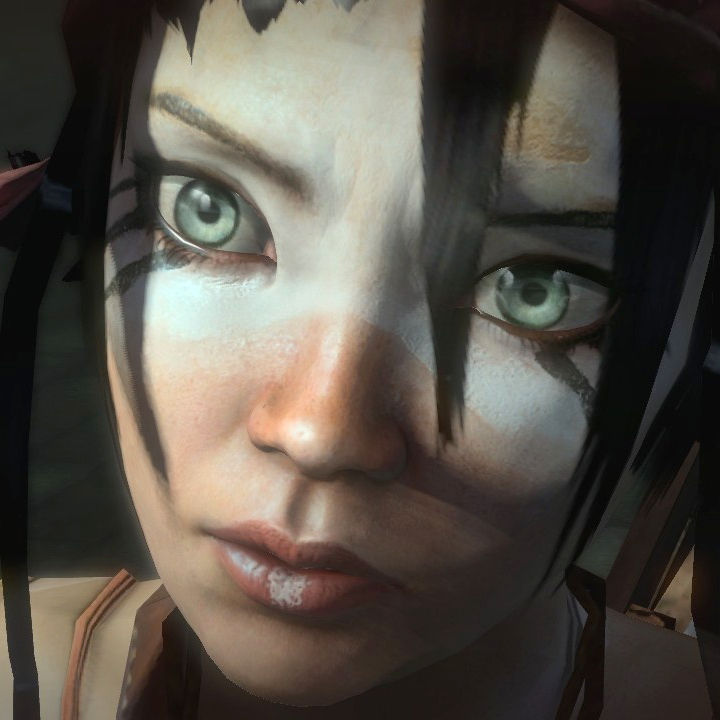


Hair / Cloth for Holograms
Make digital humans read as present, not staged
Hologram productions depend on more than a convincing face. Hair and clothing need to hold up as the performer turns, moves, and appears under live conditions, because even small simulation flaws can break the illusion. At Mimic Productions, we build 3D hair and cloth solutions that support holographic digital humans, stage-led character work, museum pieces and branded presentations.
Our approach is practical: choose the right amount of simulation for the display method, the shot length and the performance schedule. Full hair or cloth simulation can be used where motion detail matters most. Bone-driven hair or rigged cloth is often a better fit when the asset must remain responsive in real time. For shorter, stylised or efficiency-led work, rigged skin binding and weighted cloth can provide a cleaner handoff to the animation rig.
Production challenges
Where hologram teams usually need support
Hair and cloth are often the last details approved, but they influence how believable the whole character feels.
01
Motion has to survive close viewing
In holographic presentations, the audience notices mismatched movement quickly. Hair and garments need to respond naturally to body motion, wind, turns and pauses without distracting from the performance.
03
One character may need several outputs
A hologram asset may also appear in edits, exhibition screens or promotional material. Hair and clothing should be built so the same character can be adapted without losing continuity.
02
The asset may need real-time performance
Some hologram builds are stage-led or interactive, so the character cannot rely on heavy simulation alone. The rig has to stay practical for engines and live production workflows.
What your team gets
What this adds to a hologram production
01
More convincing presence
Hair and cloth move in ways that support identity, posture and emotion.
02
Better technical fit
Simulation can be tuned for cinematic, interactive or stage use.
03
Cleaner animation handoff
Weighted or rigged solutions reduce friction when the show timing is fixed.
04
Easier multi-platform reuse
The same character can be prepared for holograms, real-time scenes and edits.
Capabilities and deliverables
Relevant production capabilities
-
- 3D hair simulation for character-led holograms. Define the silhouette, density and behaviour needed in close-up and motion.
-
- Bone-driven hair for real-time performance. Define the silhouette, density and behaviour needed in close-up and motion.
-
- Non-dynamic hair for stylised looks. Define the silhouette, density and behaviour needed in close-up and motion.
-
- 3D cloth simulation with fabric-aware movement. Review fit, movement and intersections against the garment reference.
-
- Rigged cloth for animation-led workflows. Review proportions, range of movement and the animation handoff.
-
- Optimisation for Unreal and Unity. Discuss the target application and practical performance constraints.
-
- Support for live shows, museums and exhibitions. Set a clear scope and review sequence with your production team.
-
- Integration with digital human character pipelines. Discuss the required result and production scope during the project briefing.
Production approach
Built for holographic character delivery
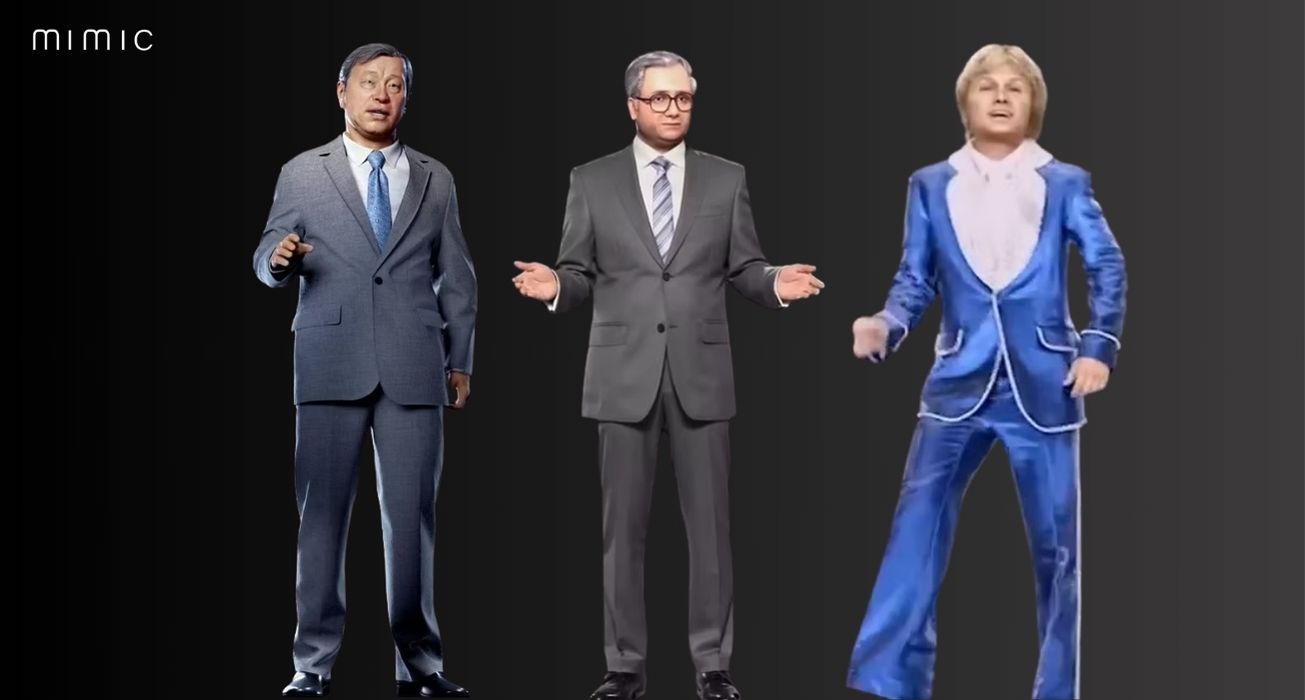
Mimic Productions combines hair and cloth simulation with character creation, facial animation, motion capture and real-time production thinking. For holograms, that means the wardrobe and hairstyle are planned as part of the visible performance, not added as an afterthought.
We can support digital humans that need to stand up on stage, in exhibitions or in immersive brand environments, where the performer may need to feel believable from the first frame to the final pose. The aim is not only visual realism, but a result that can be delivered, repeated and adapted across the wider production pipeline.
For holograms, that decision matters because the audience is often close, the camera may move unpredictably, and the asset may need to be reused across different venues or edits. We help teams balance realism, performance and delivery by shaping hair and cloth around the wider digital human pipeline, rather than treating them as isolated effects.
The same thinking applies whether the output is a holographic performer, a historic figure, a brand ambassador or a character that must appear consistent across stage content and digital screens. We can support early look development, production-ready simulation and the final optimisation needed for real-time environments such as Unreal or Unity.
Provide grooming and garment references together with the character’s planned movement. Review the silhouette in still poses and in motion, and discuss intersections, material appearance and the requirements of the target rendering or real-time pipeline. For holographic presentation, share the display format, viewing distance and staging constraints before defining the character’s framing.
Explore our Digital Hair and Clothing services and Holograms production.
Related production services: 3D Modeling for Holograms · 3D Animation for Holograms · Digital Hair and Clothing for Immersive Events.


How we work
How we work
01
Review the display need
We start with the intended setting, whether that is a live stage, exhibition space or interactive presentation, and identify how much simulation the asset can support.
02
Choose the right hair and cloth method
Depending on the look and runtime, we recommend full simulation, rigged alternatives or a hybrid workflow that keeps the production manageable.
03
Build and refine against performance
Hair and clothing are tested against character motion so folds, strands and silhouette hold together in the planned hologram context.
04
Prepare the handoff
We deliver assets in a form that can sit within the wider character pipeline, with attention to real-time use, reuse and production continuity.
Frequently asked questions
Frequently asked questions
Do hologram projects always need full simulation for hair and clothing?
Not always. Full simulation is useful when motion detail is central to the shot, but many hologram productions work better with rigged or bone-driven solutions. The right choice depends on the display method, the runtime limits and how the character will be reused across the production.
Can you support both stage-led and real-time hologram work?
Yes. Our work includes support for live performances, museums, exhibitions and real-time environments such as Unreal and Unity. That means hair and cloth can be planned around live show timing, interactive presentation or a more cinematic delivery, depending on the brief.
Is hair and cloth handled as part of the full digital human pipeline?
It can be. Mimic’s hologram source describes a complete character workflow that includes scanning, modelling, animation and final experience delivery, while the hair and cloth source explains the simulation methods used to complete the character. In practice, they can be planned together.
Can you make a hologram character suitable for more than one output?
Yes, provided the production is planned that way. Our work includes a digital human can be adapted across appearances and experiences. Hair and cloth need to be built with that reuse in mind so the asset remains coherent across stage, edit and digital formats.
Do you create the projection hardware or the hologram display itself?
No. The provided sources focus on character creation, facial animation, motion capture, rendering and experience delivery. Hair and cloth work supports the character side of the pipeline, but it does not supply the projection hardware or the display system.
Can you help if we only need the character to feel believable in a brief hologram sequence?
Yes. For short appearances or stylised characters, rigged or non-dynamic approaches may be the better fit. That lets the production focus on a convincing silhouette and controlled movement without overbuilding simulation that the brief does not require.
Frequently asked questions