.png)


Character Rigging | Holograms
Rig digital people that can stand up on stage
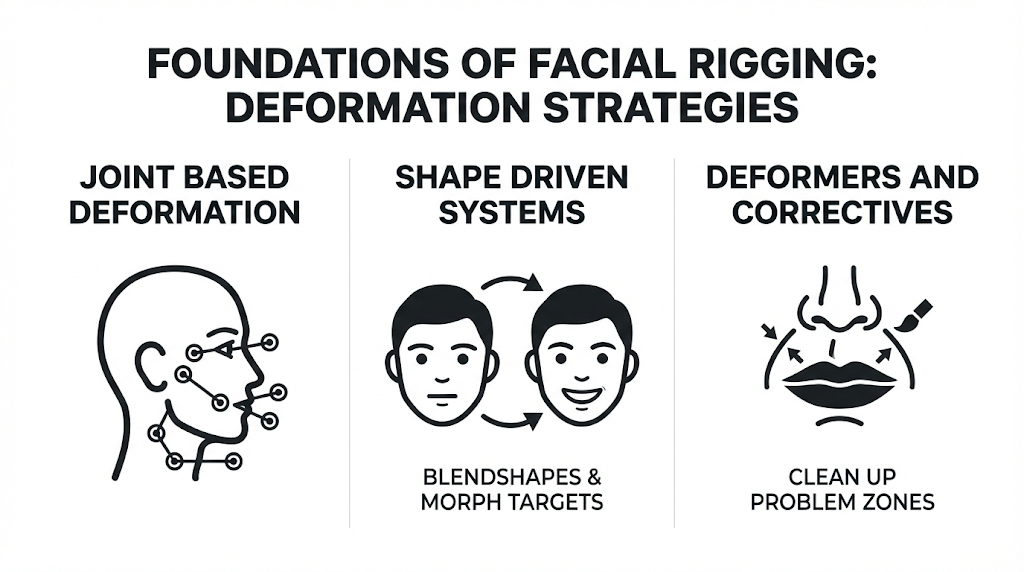
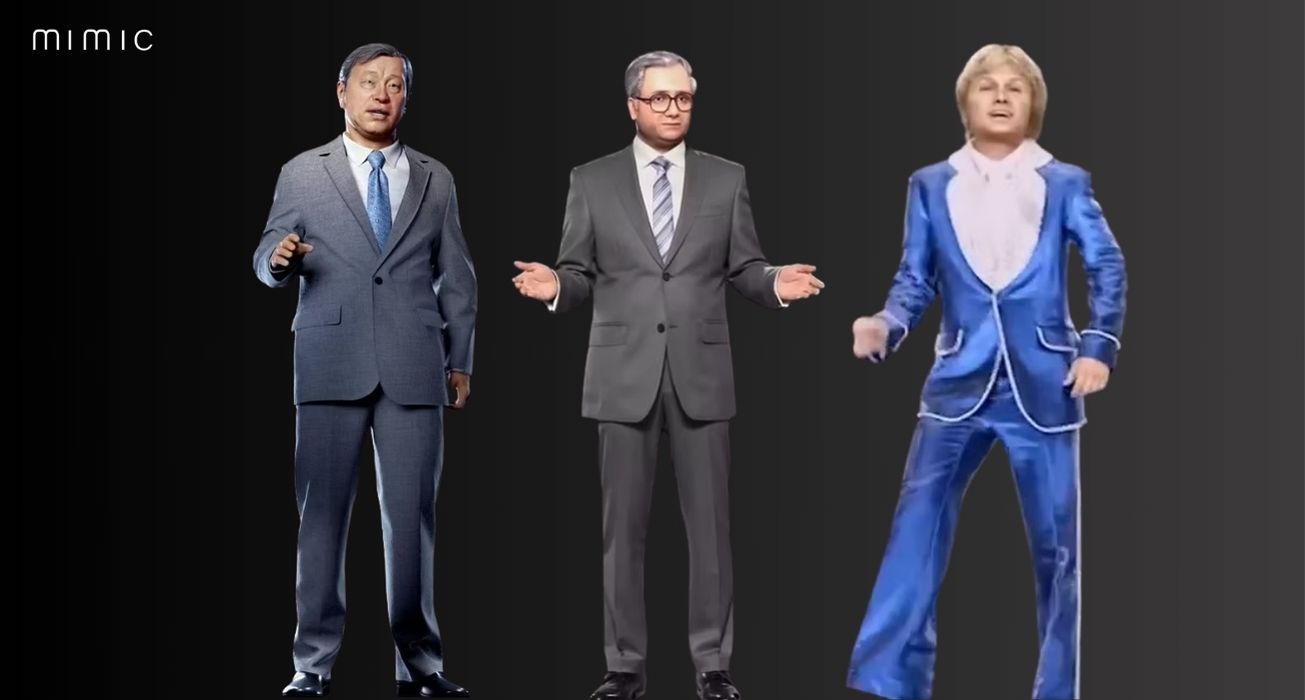
Hologram productions ask for more than a convincing render. They need a character that can hold identity under stage lighting, camera movement, real-time playback and fast creative changes. Mimic Productions builds facial and body rigging for digital humans, historical recreations and original characters designed for holographic experiences, exhibitions and live performance. Our rigging work creates the technical backbone for believable expression, pose and timing. For hologram use cases, that means the face must read clearly from a distance, the body must remain stable through strong gesture, and the character must be ready for animation, rendering and deployment across the chosen experience. We work from reference, scans, performance data and artistic direction to produce rigs that support the way a hologram is actually used, whether it appears on stage with musicians, guides museum visitors or carries a brand story. Facial rigging is one of our core strengths. We build blend-shape facial rigs from actor expression scans where needed, and we can tailor the number and complexity of shapes to the production. That is useful when a holographic character needs subtle personality rather than broad motion alone. Wrinkle maps, expression detail and body rigging are added where they support the performance and the final audience view. For holograms, the handoff matters. A rig that looks good in isolation still needs clean animation controls, sensible deformation and a setup that can be used across production stages.
Production challenges
What hologram teams need from rigging
Holographic characters are judged instantly. These are the most common rigging issues our team plans around.
01
Readable expression at distance
Small facial choices disappear if the rig is built only for close-up work. Hologram characters need expressions that stay clear on stage, in exhibition spaces and in mixed lighting.
03
A practical production handoff
Hologram projects usually involve animation, rendering and display partners. The rig must be delivered in a form that supports those teams, with controls and deformation that stay manageable.
02
Bodies that can support performance
A character that will gesture, turn or dance needs stable body rigging with believable motion. The setup must keep anatomy intact while allowing the performance to remain expressive.
What your team gets
Why teams choose Mimic for this work
01
Facial systems with depth
We use facial rigging and wrinkle maps to preserve nuance, identity and emotion.
02
Body rigs for staged movement
Our body setups support strong gestures, pose changes and character action.
03
Built for real-time use
We can optimise character rigging for Unreal, Unity and other real-time workflows where required.
04
Scoped to the performance
We match the rig to the production need, from focused essential shapes to fuller film-style detail.
Capabilities and deliverables
Rigging capabilities used for holograms
-
- Blend-shape facial rigging. Review proportions, range of movement and the animation handoff.
-
- Wrinkle map creation. Discuss the required result and production scope during the project briefing.
-
- Full body rigging. Review proportions, range of movement and the animation handoff.
-
- Creature and human rigs. Review proportions, range of movement and the animation handoff.
-
- Real-time character optimisation. Discuss the target application and practical performance constraints.
-
- Facial performance support. Identify the expressions and close-up detail required by the performance.
-
- Animation-ready deformation. Review proportions, range of movement and the animation handoff.
-
- Pipeline handoff for production teams. Confirm the receiving pipeline, file requirements and review responsibilities.
Production approach
From identity capture to a rig that can perform
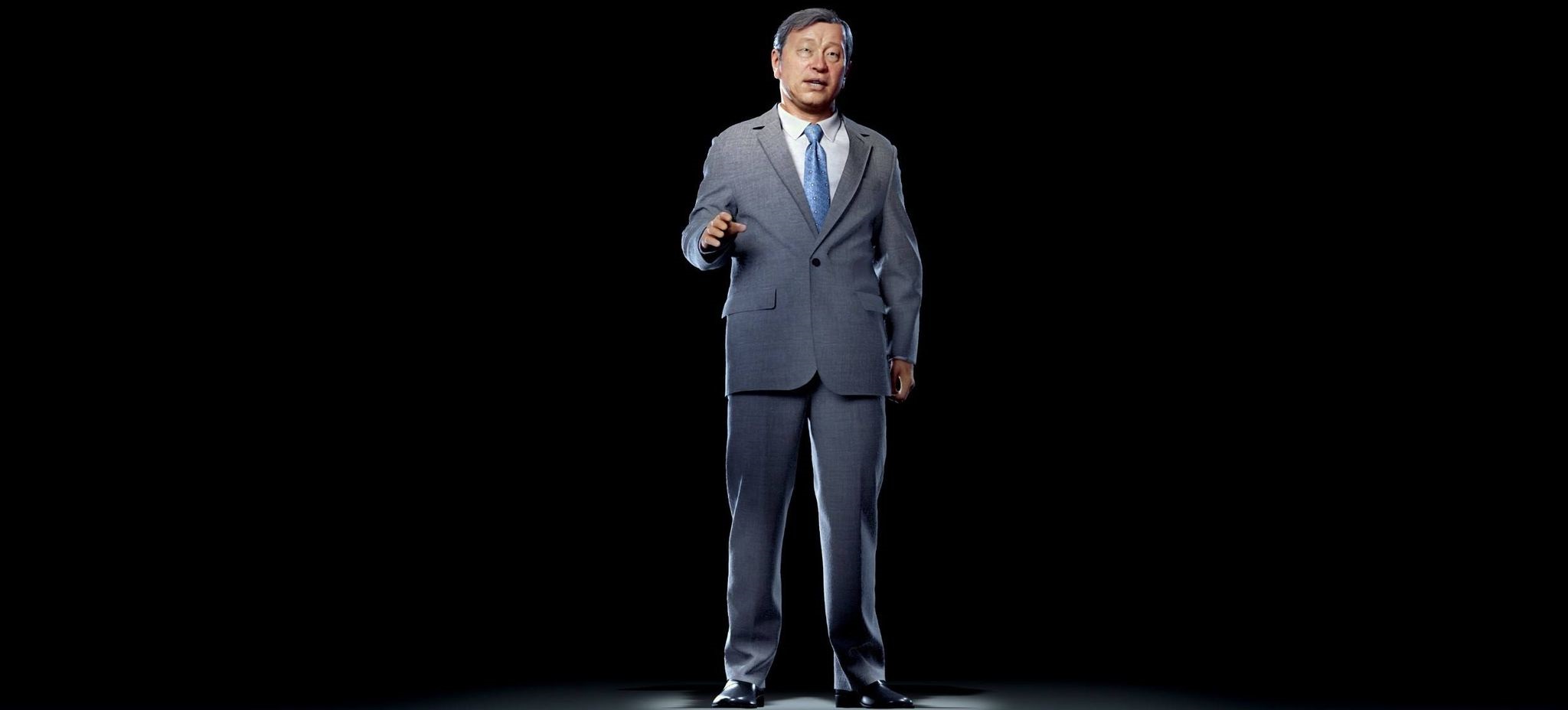
A hologram begins with identity, but it succeeds through performance. Mimic’s character rigging process starts by understanding how the character will be seen, animated and delivered. For a stage appearance, that may mean prioritising strong facial readability, robust body motion and clean playback. For an exhibition or interactive environment, it may also mean keeping controls practical for repeated use and adapting the character to a real-time pipeline.
Our facial rigging approach can be built from actor expression scans and tailored blend-shape sets, giving animators the range needed for subtle emotion or stylised presentation. When the production calls for added realism, wrinkle maps can sit alongside the facial system to support the face in motion. Body rigging is built with the same practical aim, giving the character flexibility while protecting the silhouette and anatomy that make the performance believable. The result is a rig prepared for animation, rendering and whatever final holographic format the production requires.
Supply the model, expected range of movement and examples of expressions or poses. Review deformation at demanding positions, then agree controls, naming and the handoff to the animation team before the rig is used across a larger sequence. For holographic presentation, share the display format, viewing distance and staging constraints before defining the character’s framing.
Explore our Character Rigging services and Holograms production.
Related production services: 3D Animation for Holograms · Motion Capture for Holograms · Character Rigging for Immersive Events.


How we work
How the rigging pipeline is structured
01
Review the performance goal
We start with the intended use of the hologram, the level of realism required and the way the character will be seen by the audience.
02
Build the facial and body system
The rig is assembled with the right blend-shape structure, deformation logic and controls for the character and production scope.
03
Test motion and expression
We check how the rig behaves through facial performance, pose changes and staged movement, then refine where the character needs more clarity.
04
Prepare the handoff
The finished rig is delivered in a way that supports animation, rendering and deployment across the agreed holographic workflow.
Frequently asked questions
Questions from hologram producers
Do you only rig photoreal digital humans?
No. We rig digital humans, brand characters and creature-style characters where the hologram concept requires them. The key is that the rig supports the performance and the intended audience view. We shape the setup around the character’s purpose, the delivery format and the amount of animation flexibility needed.
Can you build a rig for real-time use?
Yes, real-time character optimisation is one of the rigging capabilities listed by Mimic. That can be useful when a hologram needs to work in live or interactive contexts. The exact setup depends on the target engine, animation approach and the amount of detail the production can support.
Do you provide the hologram hardware?
No. Our work includes character and experience production, not projection hardware supply. Our role is the digital character side, including rigging, animation support and preparation for the chosen deployment environment.
Can you work from scans or reference footage?
Yes. Mimic’s hologram workflow begins by gathering references through photography, video, 3D scanning and performance data. Those inputs help shape identity, proportions and facial detail so the rig matches the character the production wants to present.
What if the project needs only the face?
That is possible. Facial rigging can be scoped on its own, or built as part of a wider body setup. If the hologram relies on expression and identity more than full movement, we can focus the rigging effort on the features that matter most to the performance.
Can the same character appear in different eras or looks?
Mimic’s hologram source describes one digital human existing in multiple appearances, eras and creative interpretations while preserving identity. Rigging supports that flexibility by keeping the character performant across different animation and presentation needs, although the final creative scope still depends on the brief.
Frequently asked questions