.png)


Medical 3D scanning
High-detail body capture for medical workflows
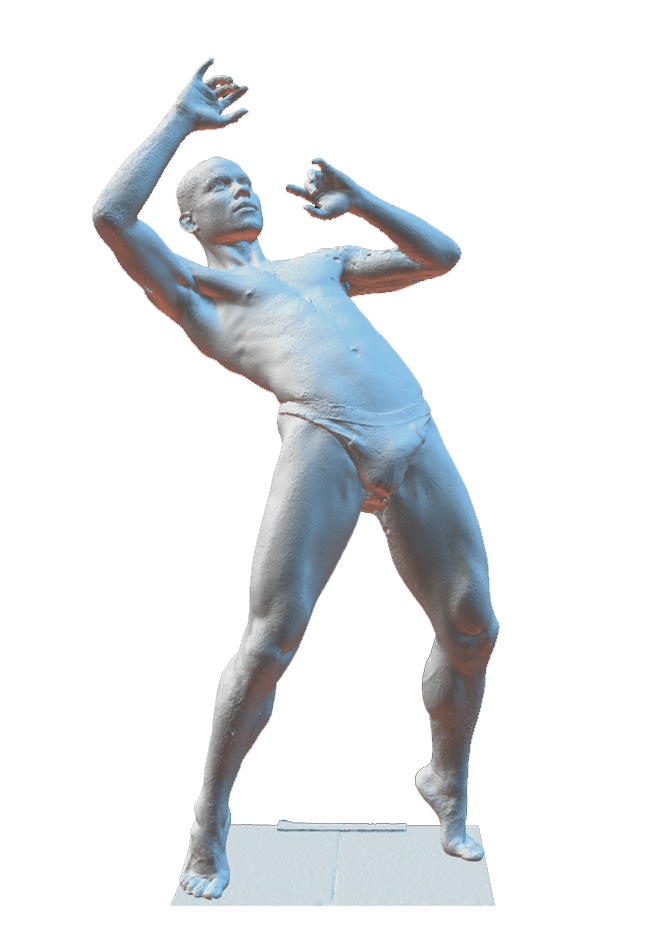
Mimic’s 3D body scanning service supports medical teams that need accurate visual material for communication, research presentations and digital human workflows. Our photogrammetry-based capture is designed to preserve fine surface detail, high-resolution texture information and full-body proportion, giving you a dependable starting point for visualisation projects where realism matters.
In a medical context, the value of a scan is not only the image itself. It is also the way that capture fits into a wider production pipeline. Teams may need a clean body scan for character production, a facial scan for expression work, or a full body dataset that can be refined for animation-ready use. We offer studio-based scanning in Berlin and on-location sessions when the production timeline requires flexibility.
Production challenges
Common medical capture needs
Medical teams often need scan data that is useful beyond the first capture session.
01
Visual clarity for non-clinical communication
Patient education, internal review and stakeholder presentations often need realistic human imagery rather than abstract models. A detailed 3D body scan can help create grounded visual assets while staying focused on communication rather than diagnosis.
03
Flexible capture for changing project settings
Clinical, research and medical communications projects do not always happen in a controlled studio. Mimic offers Berlin studio capture and on-location scanning, which helps when timing, access or production logistics are the main constraint.
02
Assets that fit the next stage of production
A scan is only useful if it can move into modelling, rigging or animation. Medical projects may need clean geometry, consistent texture maps and optional re-topology so the scanned subject can be prepared for later creative or XR use.
What your team gets
Why teams choose this approach
01
Detailed geometry
Photogrammetry capture preserves high-resolution surface form for realistic body representation.
02
Texture-rich output
Fine texture maps help scanned subjects read clearly in visual and digital double workflows.
03
Studio or on location
Choose controlled Berlin capture or travel-based sessions depending on your schedule.
04
Pipeline-aware delivery
Scans can be prepared for modelling, animation or other downstream production stages.
Capabilities and deliverables
What we can provide
-
- 3D body scanning. Agree subject coverage and the downstream use of the captured detail.
-
- 3D full body scanning. Agree subject coverage and the downstream use of the captured detail.
-
- 3D face scanning. Identify the expressions and close-up detail required by the performance.
-
- Photogrammetry capture. Agree subject coverage and the downstream use of the captured detail.
-
- Digital doubles. Discuss the required result and production scope during the project briefing.
-
- Character creation support. Set a clear scope and review sequence with your production team.
-
- Re-topology for scan preparation. Agree subject coverage and the downstream use of the captured detail.
-
- Studio and on-location sessions. Discuss the required result and production scope during the project briefing.
Production approach
How this supports medical production
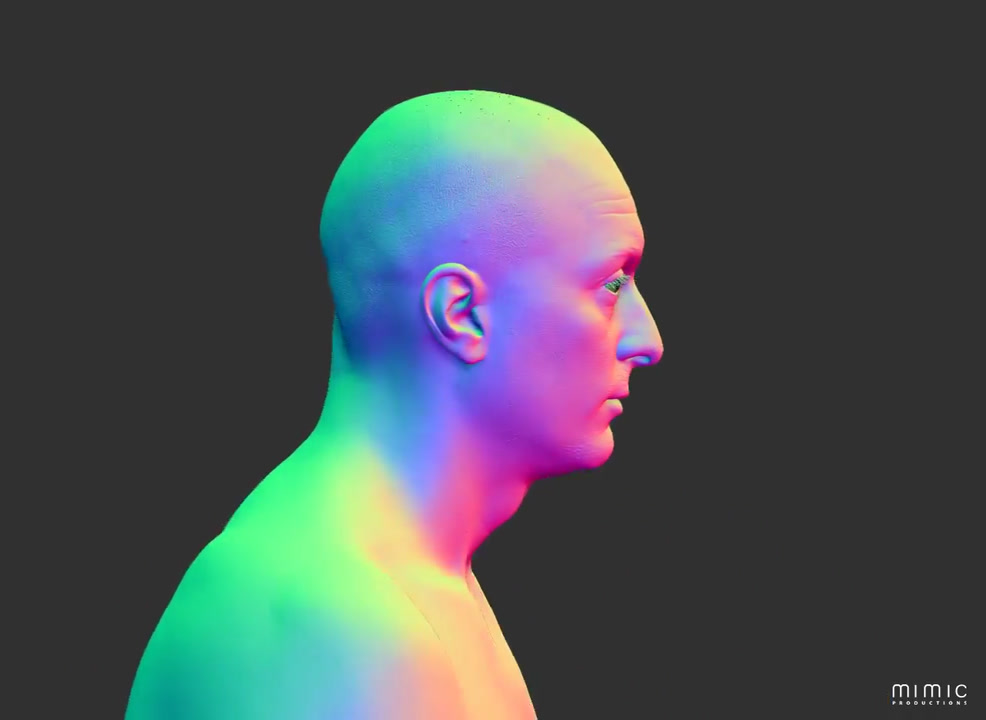
For medical clients, 3D body scanning is most useful when it is treated as a production asset rather than a standalone novelty. Mimic’s workflow is built around photogrammetry capture of body and facial detail, with outputs suited to digital doubles, avatars and other visual applications. That makes it relevant for medical visualisation teams that need realistic human form for communication, research-facing presentations or immersive media.
If a project only needs reference material, the scan may be enough as captured. If the asset must be animated or integrated into a wider XR or character pipeline, additional preparation such as re-topology becomes part of the conversation. That handoff matters in medical work, where different teams may be responsible for capture, modelling and final delivery. We focus on giving you a clear starting point and a realistic path to the next production step.
Our work includes Mimic Health XR as a focus area for supporting medical research and patient care through immersive, data-driven solutions. It also notes work with cosmetic and medical firms, which shows that the service can sit inside broader visual communication and digital-double workflows. For medical buyers, that usually means clarity on scope: whether the deliverable is a visual reference, a scan for modelling, or the basis for later re-topology and texturing.
If you need a scan that will sit comfortably alongside medical imaging, training content or patient-facing visual material, the important questions are practical. What level of detail is needed, where will the asset be used, and what downstream team will handle rigging, animation or presentation? Mimic’s scanning service is built to answer those production questions without forcing you into a one-size-fits-all output.
Explore our 3D Body Scanning services and Medical Visualisation production.
Related production services: 3D Modeling for Medical Visualisation · Character Rigging for Medical Visualisation · 3D Body Scanning for XR.


How we work
Typical project flow
01
Define the deliverable
We confirm whether you need a body scan, face scan or full capture set, and how the asset will be used in medical visualisation or downstream production.
02
Plan capture conditions
We agree location, timing and practical requirements, with studio sessions in Berlin or on-location scanning where the production calls for it.
03
Capture and review
Our photogrammetry process records geometry and texture detail, then the results are checked against the intended use and required level of realism.
04
Prepare handoff files
If the scan must move into modelling or animation, we can support preparation through re-topology so the asset is ready for the next team.
Frequently asked questions
Questions medical teams ask
Is this service intended for medical diagnosis?
No. The source material positions Mimic’s medical work around visualisation, immersive communication and data-driven support. 3D body scanning is therefore best understood as a capture and production service, not as a diagnostic tool or a replacement for clinical imaging.
Can you scan in a studio and on location?
Yes. The official 3D body scanning source states that Mimic offers scanning at its Berlin studio and on location. That flexibility is useful when access, timing or production conditions make one setting more practical than the other for the medical team.
What kind of output do you deliver?
The source describes high-resolution geometry and detailed texture maps, with outputs suitable for digital doubles, avatars and production workflows. If the scan needs to move further into animation or character work, re-topology is also offered as a preparation step.
Do you only scan full bodies?
No. The service material covers 3D body scanning, 3D full body scanning and 3D face scanning. That means medical projects can focus on the body region, facial detail, or a complete human capture depending on the communication or production need.
Can this support medical XR or patient communication content?
Yes, as a visual production asset. The medical source mentions support for immersive, data-driven solutions through Mimic Health XR. Combined with scanning, that makes the service relevant for medical communication material, presentation assets and related digital human workflows.
What should we prepare before booking?
It helps to know the intended use, whether the scan needs to be animation-ready, and whether the session should happen in Berlin or on location. Those details shape capture planning, output structure and any follow-up work such as re-topology or modelling.
Frequently asked questions