.png)
Motion Capture vs. Performance Capture: Key Differences Explained
Updated: Aug 24

Motion capture and performance capture are two of the most influential techniques in modern filmmaking, gaming, VR, and digital character creation. While the terms are often used interchangeably, they represent distinct methods with different purposes, technologies, and creative outcomes. Understanding the differences between motion capture vs. performance capture is essential for studios, directors, animators, and creators aiming to build believable digital humans and lifelike 3D characters.
At Mimic Productions, these technologies form the backbone of our work in cutting-edge digital human creation, virtual production, real-time animation, and immersive media. This article breaks down the differences, workflows, benefits, challenges, and future of motion capture and performance capture—while providing a complete guide to when and why to use each.
Table of Contents
What Is Motion Capture?

Motion capture often shortened to "mocap" is the process of recording body movements and transferring them to a digital character or object. It focuses primarily on the gross physical motion of the body, such as walking, running, fighting, dancing, or interacting with objects.
The goal is to produce biomechanically accurate movement that traditional keyframe animation would take far longer to create by hand.
Key characteristics of motion capture:
Captures full-body motion, usually without facial or finger detail
Ideal for action, stunts, locomotion, crowd animation, and gameplay cycles
Often recorded using optical systems or inertial motion capture suits
Outputs clean data for rigging and animation pipelines
Frequently used in video games, VR interactions, and background character animations
To learn more about mocap technologies, you can reference Mimic's dedicated guide on Types of Motion Capture Technology.
What Is Performance Capture?
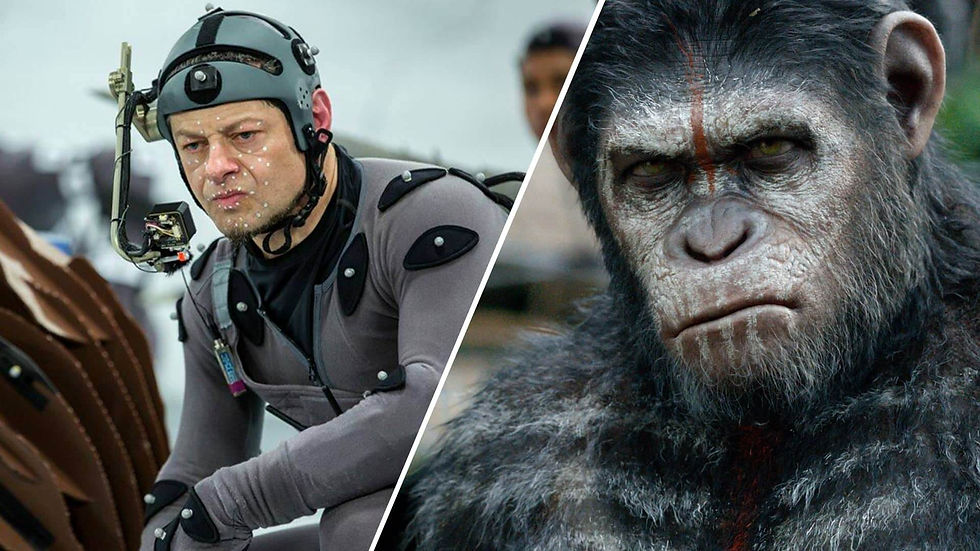
Performance capture is a more advanced form of motion capture that records the full emotional and physical performance of an actor, including:
Body motion
Facial expression
Eye movement
Finger motion
Vocal performance
This method is widely used for digital doubles and believable CG characters such as Gollum, Thanos, Caesar (Planet of the Apes), and many more.
Key characteristics of performance capture:
Records entire acting performance
Integrates simultaneously captured body, face, hands, and voice
Necessary when expressions, subtle movement, and realism are essential
Uses high-resolution facial capture systems, often in combination with head-mounted cameras
Provides emotional nuance and microexpression detail
For an in-depth look at face-specific capture, see our guide on Facial Motion Capture.
Motion Capture vs. Performance Capture: Key Differences

Motion capture and performance capture may share similar foundations, but their purpose, complexity, and output differ dramatically.
Summary of differences:
Motion capture focuses on body mechanics
Performance capture focuses on emotional acting + body + face
Performance capture is more complex, expensive, and data-heavy
Mocap is ideal for generic or action-driven cycles
Performance capture is essential for storytelling and character-driven media
How Each Capture Method Works
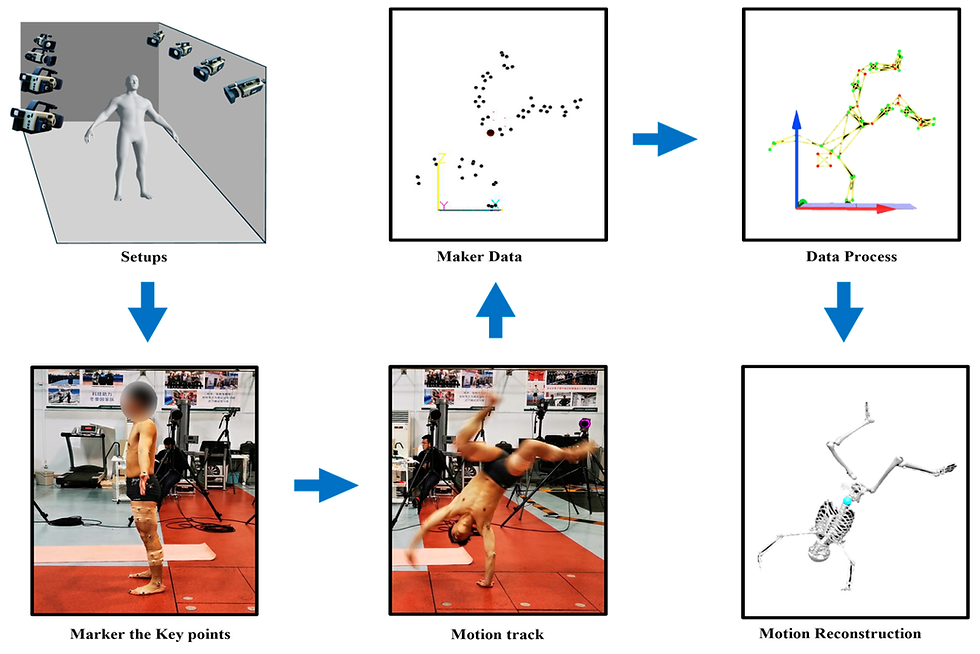
Understanding their workflows reveals why the two techniques differ so much in scale and production requirements.
How Motion Capture Works (Simplified Workflow)
Motion capture systems track body movement through markers, sensors, or cameras.
Key steps:
Actor wears a mocap suit (optical markers or inertial sensors).
Movements are recorded by cameras or IMUs.
Data is transferred to a 3D skeleton (rig).
Animators clean or retarget the motion onto a digital character.
Learn about suits used in this process: Motion Capture Suits.
How Performance Capture Works (Expanded Workflow)
Performance capture blends body movement with facial and vocal performance.
Key steps:
Actor wears full mocap gear + head-mounted facial camera.
Facial capture cameras record expressions in high resolution.
Body and face data are synchronized into a single timeline.
Voice acting is recorded simultaneously.
High-end retargeting and cleanup ensure emotional accuracy.
Technology Used in Motion Capture and Performance capture Methods

Both types of capture can use similar underlying technologies, but performance capture integrates additional layers.
Common technologies:
Optical camera systems
Inertial capture suits
Hybrid mocap solutions
Marker-based or markerless tracking
Calibration tools and 3D rigs
Additional tech used in performance capture:
Sub-millimeter facial tracking
Head-mounted cameras (HMCs)
Multi-camera facial rigs
Audio synchronization
AI-driven facial reconstruction
Real-time solvers for emotional fidelity
When to Use Motion Capture
Motion capture shines in projects requiring efficiency, repeatability, and action.
Best use cases:
Video game animation cycles (walking, jumping, combat)
Sports simulations
VR/AR movement tracking
Background crowds
Stunts and fight choreography
Creature motion
Real-time interactive experiences
For more detail on comparing mocap to traditional animation techniques, see Motion Capture vs. Animation.
When to Use Performance Capture
Performance capture is the right choice when storytelling and emotional weight are essential.
Best use cases:
Feature films
Cinematic cutscenes
Digital doubles
Realistic human characters
High-end VFX for drama or dialogue
Virtual production acting
Digital avatars with expressive performance
Industry Applications of Motion Capture and Performance capture

Motion capture and performance capture power a wide range of industries. Mimic Productions utilizes both across multidisciplinary projects.
Industries using these technologies:
Film & TV – realistic characters, stunts, digital doubles
Video Games – cinematic storytelling, in-game animations
VR/AR – real-time embodiment and immersive avatars
Advertising – animated brand mascots, digital humans
Medical & Biomechanics – movement analysis
Sports – athlete motion study
Robotics – motion learning for humanoid robots
Metaverse development – avatar creation and digital identity
Visit Mimic Productions’ homepage for more capabilities: https://www.mimicproductions.com/
Benefits of Motion Capture
Motion capture offers speed, accuracy, and production efficiency.
Key benefits:
Highly accurate body movement data
Reduces animation time and cost
Ideal for repetitive or high-action scenes
Supports real-time visualization
Works well with game engines like Unreal and Unity
Provides natural fluidity difficult to hand-animate
Benefits of Performance Capture
Performance capture provides emotional depth and human nuance.
Key benefits:
Captures authentic human emotion
Enables lifelike digital humans
Reduces disconnect between facial and body animation
Perfect for films requiring realistic characters
Captures voice, expression, and movement simultaneously
Delivers unmatched character fidelity
Challenges of Motion Capture and Performance capture
Both techniques come with limitations, though they differ significantly.
Challenges of Motion Capture
Limited facial detail
May require cleanup for occluded markers
Not ideal for close-up emotional scenes
Sensor drift (in inertial systems)
Requires controlled studio environments
Challenges of Performance Capture
More expensive and labor-intensive
Complex synchronization
Requires higher-end equipment
Large amounts of data to process
Actors must perform with restrictive gear
Comparison Table: Motion Capture vs. Performance Capture
Feature / Aspect | Motion Capture | Performance Capture |
Focus | Body movement | Full emotional performance |
Captures Face? | No | Yes |
Captures Fingers? | Sometimes | Yes |
Captures Voice? | No | Yes |
Best For | Action, gameplay cycles, stunts | Cinematic storytelling, dialogue scenes |
Cost | Lower | Higher |
Complexity | Moderate | High |
Output Detail | Medium | Very high |
Applications | Games, VR, crowd animation | Films, cutscenes, digital doubles |
The Future of Motion & Performance Capture

The future of both techniques is deeply intertwined with AI, real-time rendering, and virtual production pipelines.
Key trends shaping the future:
AI-driven markerless capture for faster, more flexible recording
Real-time facial solving inside engines like Unreal
Virtual production integration, blending mocap with LED volumes
Photoreal digital humans in real-time
Hybrid mocap pipelines combining optical + inertial + AI
Automated cleanup tools powered by machine learning
Remote mocap, allowing actors to perform from anywhere
As these tools evolve, the line between motion capture and performance capture will continue to blur—but their fundamental roles will remain distinct.
FAQs on Motion Capture vs. Performance Capture
1. What is the main difference between motion capture and performance capture?
Motion capture records body movement, while performance capture records the entire emotional performance, including face, eyes, hands, and voice.
2. Is performance capture better than motion capture?
Not necessarily. Performance capture is better for storytelling and realism; motion capture is better for action-heavy or gameplay-focused content.
3. Do you need facial cameras for performance capture?
Yes. Facial tracking and head-mounted cameras are essential for capturing emotional nuance.
4. Which is more expensive: motion capture or performance capture?
Performance capture is typically more expensive because it requires additional equipment, synchronization, and post-production.
5. Can motion capture be used without a studio?
Yes, with inertial motion capture suits, mocap can be done outdoors or on location.
6. What industries rely on performance capture the most?
Film, TV, AAA game cinematics, and virtual production rely heavily on performance capture.
7. Can motion capture and performance capture be combined?
Absolutely. Many productions combine body mocap with separate facial capture for a hybrid workflow.
8. Does AI replace motion capture?
AI enhances but does not fully replace mocap especially for high-end, physically realistic performances.
Conclusion
Understanding motion capture vs. performance capture is essential for choosing the right approach for your project. Motion capture excels in efficiency and body movement realism, while performance capture delivers emotional depth and lifelike digital characters. Both techniques play vital roles in modern filmmaking, gaming, and immersive experiences.
Mimic Productions specializes in the full spectrum of these technologies—from high-end facial capture to complex full-body performance capture—providing world-class digital human and animation services. Whether you’re building a cinematic digital double or choreographing complex game animations, our team brings unmatched precision, artistry, and technical expertise.
Contact us For further information and queries, please contact Press Department, Mimic Productions: info@mimicproductions.com
Explore Our Instagram Breakdown
For a quick, visual carousel summary of Motion Capture vs. Performance Capture, check out Mimic Productions’ latest Instagram post.It highlights the core difference “between capturing a stunt and capturing a soul”—perfect for readers who prefer fast, swipeable insights.
Swipe through to see the full breakdown:


Comments