.png)
What Is Photogrammetry for 3D Character Scanning?
Updated: Aug 26

Photogrammetry has rapidly become one of the most powerful—and indispensable—tools in the world of 3D character creation. Whether you’re building digital humans for film, gaming, VR, or virtual production, photogrammetry provides the realism, accuracy, and efficiency that traditional modeling methods simply can’t match.
In this in-depth guide, we’ll break down what photogrammetry is, how it works, and why it’s such a critical component of modern 3D character scanning pipelines. We’ll explore its applications, benefits, challenges, and future potential—including how studios like Mimic Productions integrate photogrammetry alongside technologies like motion capture, digital twins, and full-body scanning.
Table of Contents
What Is Photogrammetry?

Photogrammetry is the process of capturing real-world objects—or people—by taking many overlapping photographs from different angles and using specialized software to reconstruct them into precise 3D models. It essentially transforms 2D images into textured 3D geometry.
Photogrammetry relies on key principles such as:
Triangulation: Determining the position of points in 3D space.
Feature detection: Identifying distinguishable points across multiple photos.
Depth reconstruction: Converting the position data into mesh geometry.
This process is commonly used in industries like VFX, gaming, cultural heritage, architecture, and, most importantly, 3D character scanning for digital humans.
How Photogrammetry Works

The photogrammetry pipeline is a careful combination of photography, processing, and refinement. Here’s a simplified breakdown:
1. Capture Phase
Multiple synchronized cameras (sometimes 50–200+) capture a subject from all angles.
Uniform lighting
High-resolution lenses
Stable subject pose
2. Image Alignment
Software analyzes all images to identify shared points and align them in space.
Detects feature points
Estimates camera positions
Creates a sparse point cloud
3. Dense Reconstruction
The system creates millions of points that form an accurate 3D representation.
Dense point cloud
Initial geometry generation
4. Mesh Generation & Texturing
The point cloud is converted to a mesh, and high-resolution textures are projected onto it.
Color-accurate textures
Ultra-high-detail surface reconstruction
5. Cleanup & Optimization
Artists refine the scan for production. Often involves retopology and rigging.To understand why this step matters, see: What Is 3D Character Modeling.
Why Photogrammetry Is Essential for 3D Character Scanning

Photogrammetry is crucial because it captures real human likeness with an accuracy no hand-modeled method can match. In digital humans, every detail matters—skin pores, facial asymmetry, wrinkles, clothing textures, and more.
Key reasons photogrammetry is indispensable:
Unmatched realism for digital doubles, avatars, and digital twins
Speed and efficiency, especially for full-body, face, and prop scans
Accurate proportions, reducing manual corrections
High-quality texture capture, essential for close-up cinematics
Photogrammetry is also a fundamental part of digital twin workflows—explore more in Digital Twins: A Beginner Guide or deeper technical insights in Digital Twin Technology.
Types of Photogrammetry
Understanding the different types of photogrammetry is essential for anyone asking what is photogrammetry and how it applies to 3D character scanning, mapping, and digital human creation. Photogrammetry techniques are generally classified based on the position of the camera during capture. The two primary categories are Aerial Photogrammetry and Terrestrial (Close-Range) Photogrammetry, with Stereo Photogrammetry serving as a specialized, advanced method widely used for scientific and engineering accuracy.
Photogrammetry also plays a central role in fields like digital twins, which you can explore further in Digital Twins: A Beginner Guide and Digital Twin Technology.
Aerial Photogrammetry
Aerial photogrammetry is the most widely used method for mapping and large-scale environmental capture. In this technique, the camera is mounted on an aircraft or drone and pointed vertically toward the ground. As the aircraft follows a pre-determined flight path, the camera takes multiple overlapping images of the terrain.
Key Characteristics of Aerial Photogrammetry:
Camera mounted on an aircraft or drone
Vertical shooting angle
Large-area coverage
Ideal for terrain, topography, and mapping
Used extensively in urban planning, agriculture, and environmental analysis
Historically, technicians relied on stereo plotters to manually analyze overlapping images. Today, advanced software automates this entire process—similar to how modern 3D scanning pipelines streamline character creation. For comparison with related tech, see 3D Printing vs 3D Scanning.
Terrestrial (Close-Range) Photogrammetry
Terrestrial or close-range photogrammetry is performed from the ground, using handheld or tripod-mounted cameras. The camera axis is typically parallel to the Earth’s surface. This method is extremely common in filmmaking, architecture, cultural preservation, and—critically—3D character scanning.
This is the type most relevant to Mimic Productions’ work in digital humans, full-body scanning, and performance capture. For more on these workflows, explore:
Key Traits of Terrestrial Photogrammetry:
Cameras remain on the ground
High-detail capture of objects, humans, structures
Used for film sets, props, digital characters, buildings, and engineering
Coordinates recorded at the moment of capture
Often paired with tools like theodolites
Known as Image-Based Modeling in the digital art community
This method is essential for creating digital doubles, realistic characters, and assets used in virtual production. It integrates seamlessly with mocap technology such as Motion Capture Suits.
Stereo Photogrammetry
Stereo photogrammetry involves capturing two or more images from slightly different angles to calculate precise 3D coordinates. It works on the principle of stereopsis—the same mechanism your brain uses to perceive depth when combining different images from each eye.
This technique is powerful for engineering and scientific applications where extreme measurement precision is required.
Key Characteristics of Stereo Photogrammetry:
Uses two or more overlapping photos
Recreates accurate 3D coordinates (x, y, z)
Based on binocular vision principles
Common in structural analysis, medical research, and motion studies
Non-contact method ideal for fragile or rotating objects
Stereo photogrammetry is also gaining traction in advanced biomechanics and virtual human simulations—areas closely aligned with the evolution of digital twin technology.
Applications of Photogrammetry
Photogrammetry’s versatility makes it invaluable across dozens of industries. Once you understand what is photogrammetry, its wide range of applications becomes clear.
Common Application Areas:
Mapping & Surveying: Government agencies create cost-efficient maps from aerial photos.
Architecture & Construction: Detailed site assessments help planning without prolonged manual surveying.
Engineering: Structural modeling, deformation tracking, and industrial measurements.
Film & Visual Effects: Rapid creation of realistic environments, props, and digital humans.
Police & Forensics: Crime scene reconstruction and accident documentation.
Cultural Heritage: Preserving historical sites through digital replicas.
Geology & Environmental Science: Analyzing landscapes, erosion, and terrain features.
Archaeology: Fast and accurate reconstruction of large excavation sites.
Meteorology: Used to estimate tornado wind speeds when weather instruments are unavailable.
For human-centered applications—especially scanning bodies and faces—photogrammetry forms the foundation of next-generation digital humans, avatars, and virtual production assets.
To explore more future-focused uses, visit:The Future of 3D Body Scanning.
Photogrammetry vs Other 3D Scanning Methods
To understand the strengths of photogrammetry, it helps to compare it with alternative scanning methods like laser scanning or volumetric capture.
Comparison Table: Photogrammetry vs Other 3D Scanning Methods
Feature | Photogrammetry | Laser Scanning | Volumetric Capture |
Realism | ⭐⭐⭐⭐⭐ | ⭐⭐⭐⭐ | ⭐⭐⭐ |
Cost | Low–Medium | High | Very High |
Best For | Faces, characters, clothing | Architecture, large objects | Real-time motion |
Texture Quality | Excellent | Moderate | Good |
Speed | Fast | Medium | Fast (but expensive) |
Limitations | Lighting-sensitive | Costly hardware | Lower detail |
For a related comparison, explore 3D Printing vs 3D Scanning.
Applications of Photogrammetry in 3D Production

Photogrammetry is used across a wide range of industries that rely on realism and precision.
Key applications:
Film & VFX: Digital doubles, prop scanning, environment creation
AAA Game Development: Character assets, high-quality textures
Virtual Production: Real-time-ready digital humans
VR/AR experiences: Real-world immersive avatars
Digital Twins: Replica humans for enterprise or simulations
Fashion & Retail: Virtual try-on assets
Medical / Sports: Human body analysis and biomechanicsFor more, see The Future of 3D Body Scanning.
Benefits of Photogrammetry

Photogrammetry offers powerful advantages that make it ideal for character creation:
Ultra-accurate geometry and textures
Fast capture time, ideal for large productions
Non-invasive process—perfect for actors, athletes, performers
Scalable, from small props to full environments
Cost-effective, using cameras instead of expensive laser gear
High repeatability, ensuring consistent results
These benefits make photogrammetry a staple in Mimic Productions’ scanning pipeline.
Challenges of Photogrammetry

While powerful, photogrammetry also has limitations.
Common challenges:
Lighting sensitivity causing mismatched textures
Movement of the subject leading to scan artifacts
Reflective / translucent materials being difficult to capture
Large data processing requirements
Need for experienced photography setup
Many studios, including Mimic Productions, have custom workflows to overcome these challenges.
Photogrammetry Workflow: Step-by-Step
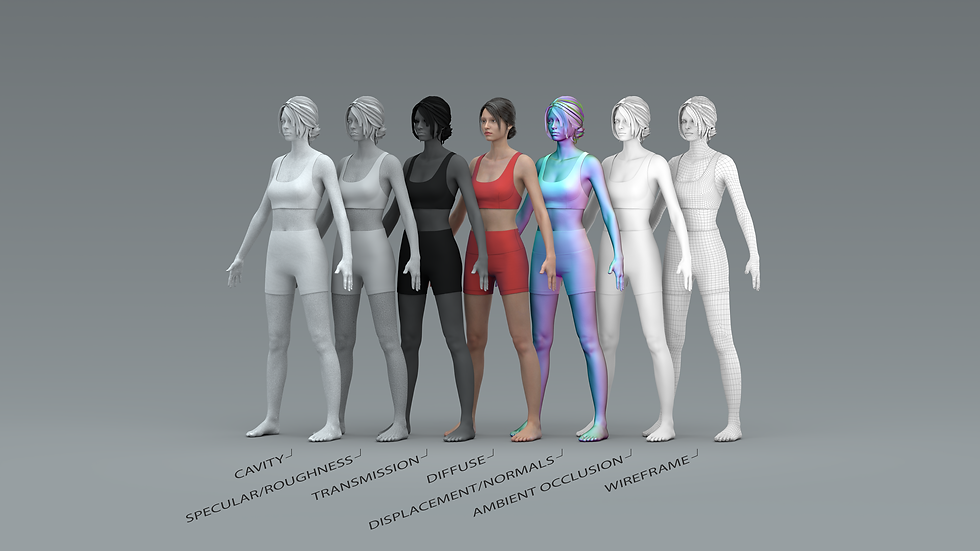
Below is a streamlined workflow commonly used in modern studios.
Capture planning – Lighting and camera placement
High-speed multi-camera photo session
Image sorting and optimization
Alignment & point cloud generation
Dense mesh reconstruction
Texture projection & baking
Mesh cleanup & optimization
Rigging & animation readiness
When animation is involved, photogrammetry pairs seamlessly with Motion Capture Suits for full-body and facial performance capture.
Comparing Photogrammetry Approaches
Here’s a high-level look at how different photogrammetry styles compare.
Workflow | Ideal Use Case | Strength | Weakness |
Studio-based multi-camera | Actors, digital doubles | Ultra-high detail | High setup cost |
Mobile photogrammetry | Travel, environments | Flexible | Lower accuracy |
Drone photogrammetry | Outdoor scanning | Large area capture | Not suitable for humans |
Hybrid scanning | Film, games | Maximum reliability | Requires complex pipeline |
Industry Use Cases
Photogrammetry plays a critical role in multiple industries:
Film & Television
Creating hyper-realistic digital doubles
Scanning costumes and props
De-aging actors
Gaming
High-detail characters for AAA titles
Realistic faces for dialogue-heavy games
Virtual Production
Linked closely to real-time digital humans; see Mimic’s homepage: https://www.mimicproductions.com
Sports & Biomechanics
Athlete scanning
Form and motion study
Enterprise Digital Twins
Human replicas for simulation and trainingExplore in Digital Twin Technology.
The Future of Photogrammetry
Photogrammetry is evolving rapidly, especially with AI-based enhancements.
Key developments:
AI-assisted reconstruction producing faster, cleaner scans
Real-time photogrammetry for immediate previews
Integration with virtual production stages
Deep-learning texture enhancement
Hybrid pipelines combining photogrammetry + mocap + digital twins
As real-time engines like Unreal and Unity improve, high-fidelity scans will become increasingly central to the creation of digital humans.
FAQs About Photogrammetry
1. What is photogrammetry in simple terms?
Photogrammetry is the process of turning photographs into 3D models using specialized software.
2. Why is photogrammetry important for 3D character scanning?
It captures extremely accurate details—making it essential for digital humans, avatars, and film-quality assets.
3. How many photos are required for photogrammetry?
Anywhere from 50 to several hundred, depending on detail level and scanning setup.
4. Can photogrammetry capture moving subjects?
No—subjects must remain still. Movement causes distortions and reconstruction errors.
5. Is photogrammetry better than 3D scanning?
For characters and faces, photogrammetry typically delivers better textures and realism at a lower cost.
6. How long does processing take?
Processing can take anywhere from 30 minutes to hours depending on resolution.
7. What software is used for photogrammetry?
Common tools include RealityCapture, Agisoft Metashape, and proprietary in-house studio tools.
8. Can photogrammetry be used with motion capture?
Yes. Photogrammetry captures static detail; mocap captures movement. Together, they create complete digital humans.
Conclusion
Photogrammetry is more than just a scanning method—it’s a cornerstone of modern digital human creation. Its precision, realism, and efficiency make it invaluable for film studios, game developers, virtual production teams, and enterprise digital twin systems.
At Mimic Productions, photogrammetry is part of a powerful ecosystem that includes motion capture, 3D modeling, digital twins, and real-time character workflows. Together, these technologies allow us to build some of the world’s most advanced digital humans with exceptional lifelike accuracy.
Contact us For further information and queries, please contact Press Department, Mimic Productions: info@mimicproductions.com


Comments