.png)
The Rise of Virtual Influencers: A New Era of Celebrity
Updated: Apr 10

Virtual influencers have rapidly evolved from experimental digital characters into global cultural icons. Powered by advanced computer graphics, real-time animation, and artificial intelligence, these synthetic personalities now command massive audiences across social platforms and brand campaigns. As consumer trust shifts and digital ecosystems expand, virtual influencers - also known as AI influencers, virtual personas, synthetic creators, and CGI celebrities—are reshaping the marketing and entertainment landscape.
Their emergence signals a broader transformation in how brands communicate, storytellers engage audiences, and creators build identity. With digital humans becoming increasingly lifelike and emotionally expressive, companies are embracing these virtual beings not only for digital influencer marketing, but also for customer service, entertainment, sports, education, and immersive experiences. This new era blends artistry, technology, and brand strategy - ushering in a celebrity ecosystem defined by creativity without physical limitations.
Table of Contents
The Evolution of Virtual Influencers

The concept of digital celebrities isn’t new, CGI characters have appeared in films and games for decades. What’s changed is the realism and autonomy enabled by AI, real-time rendering, and advanced performance capture.
Early virtual characters were static or pre-rendered. Today’s digital beings are dynamic, conversational, and capable of generating content in real time. Companies like Mimic Productions, known for world-class digital human creation, have elevated realism to cinematic quality, allowing virtual influencers to express nuanced emotions, deliver scripted or AI-generated dialogue, and adapt to diverse brand narratives.
This evolution has been fueled by:
Hyper-real facial rigs and photorealistic textures
Motion-capture and real-time performance systems
Generative AI models for language, personality, and style
Increasing consumer acceptance of virtual personalities
Virtual influencers now operate across Instagram, TikTok, YouTube, and even metaverse platforms, building fanbases rivaling human creators.
Why Brands Are Embracing Synthetic Creators

Brands are drawn to virtual influencers for both creative and strategic reasons. These digital icons allow companies to craft aspirational, narrative-driven campaigns unconstrained by physical reality, human schedules, or PR risks.
Key reasons include:
Full Creative Control
Virtual personas can be customized to embody a brand’s values, aesthetic, and tone—consistently and without controversy.
Scalability & Global Reach
A digital character can appear in multiple campaigns, languages, or locations simultaneously through AI localization and virtual production.
Cost Efficiency Over Time
Initial creation may require investment, but long-term content production becomes more predictable and efficient.
Innovative Consumer Engagement
Virtual beings can host live streams, create music, participate in interactive events, and evolve over time—blending influencer culture with transmedia storytelling.
Alignment With Digital-Native Audiences
Younger demographics respond strongly to stylized CGI creators, seeing them as aspirational, immersive, and future-oriented.
As digital influencer marketing becomes more sophisticated, brands are increasingly balancing human creators with AI-driven personalities to expand their reach.
Comparison Table
Feature / Criteria | Virtual Influencers | Human Influencers |
Creative Control | Fully customizable | Limited; bound to personal identity |
Availability | 24/7, global scalability | Requires scheduling & location |
Controversy Risk | Minimal if well-managed | High due to human unpredictability |
Production Speed | Fast once assets exist | Often slower |
Authenticity Perception | Increasing, but still debated | Strong emotional relatability |
Cost Structure | Higher upfront, lower long-term | Variable, often higher per campaign |
Narrative Flexibility | Unlimited storytelling possibilities | Limited to real-life constraints |
Applications Across Industries

As the digital landscape expands, virtual influencers are influencing far more than social media. Their applications span entertainment, retail, sports, education, and enterprise communications.
1. Entertainment & Media
Virtual celebrities can star in films, animations, and music videos. The rise of digital doubles in cinema enables lifelike performances, as covered in Mimic’s article on digital doubles.
2. Retail & Fashion
Brands use AI influencers as digital models, campaign ambassadors, or virtual showroom hosts. CGI fashion stars eliminate the constraints of traditional photoshoots.
3. Sports & Fitness
Digital athletes can demonstrate workouts or partner with sports brands. Mimic’s exploration of digital humans in sports provides deeper context.
4. Enterprise & Training
Virtual brand ambassadors support onboarding, corporate communication, and customer service with consistent, scalable messaging.
5. Gaming & Metaverse Experiences
AI-driven characters serve as guides, companions, or interactive hosts inside immersive worlds.
6. Digital Twins & Simulation
The digital twin ecosystem—explained in Mimic’s guides below—helps companies build virtual ambassadors rooted in real-world data:
7. Cross-Industry Adoption Trends
See Mimic’s broader analysis of sectors integrating digital humans here: https://www.mimicproductions.com/post/top-industries-adopting-digital-humans
These examples illustrate how virtual influencers are part of a much larger movement toward photorealistic digital humans and AI-driven experiences.
Benefits of Virtual Influencers

Virtual influencers offer a range of advantages for brands committed to innovation.
Creative and Narrative Freedom
Craft custom storylines
Adjust appearance, voice, and personality seamlessly
Break physical and logistical limitations
Brand Safety and Consistency
No unexpected scandals
Controlled messaging
Predictable output across all channels
Long-Term ROI
Once built, assets can be reused for years
Easy to refresh with new animations or AI-generated content
Global Scalability
Instant multilingual localization
Presence in multiple virtual environments simultaneously
Future-Ready Engagement
Ideal for metaverse campaigns
Perfect for next-gen AR/VR experiences
Supports conversational AI and chatbot integration
Challenges and Ethical Concerns
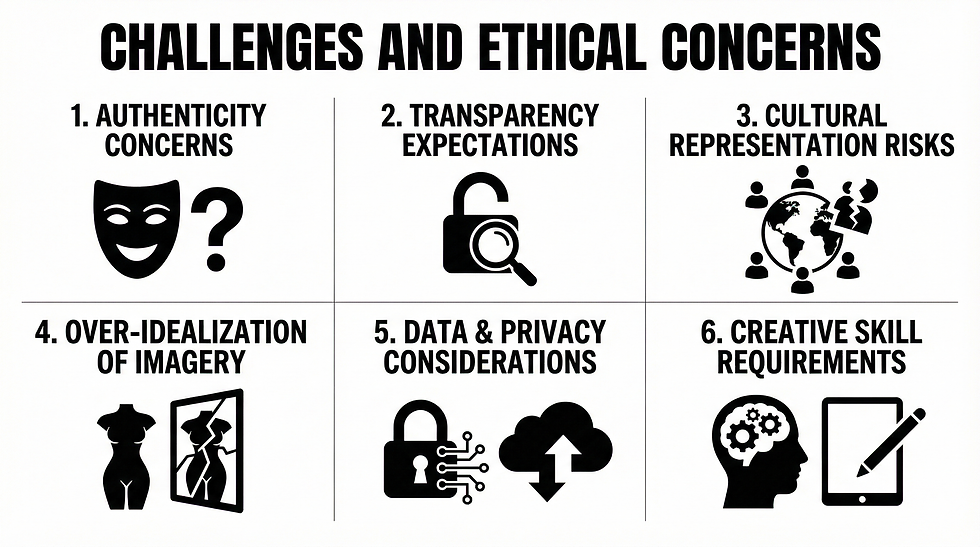
Despite their benefits, AI influencers raise important questions.
Authenticity Concerns: Some audiences question emotional connection with synthetic personalities.
Transparency Expectations: Brands must clearly disclose when characters are virtual to maintain trust.
Cultural Representation Risks: Inaccurate or insensitive portrayals may lead to backlash.
Over-Idealization of Imagery: Perfect digital bodies can influence unrealistic beauty standards.
Data & Privacy Considerations: AI-powered personas sometimes rely on datasets requiring ethical oversight.
Creative Skill Requirements: Building high-quality digital humans demands advanced talent, such as the capabilities offered by Mimic Productions.
As virtual celebrities rise in influence, organizations must balance innovation with responsibility.
Future Outlook
The next decade promises exponential growth in virtual celebrity culture. AI influencers will shift from scripted personas to autonomous digital beings capable of real-time conversation, emotional intelligence, and adaptive storytelling.
Emerging trends include:
1. Hyper-Real Digital Humans
Advances in facial animation, neural rendering, and real-time graphics will make virtual influencers nearly indistinguishable from humans.
2. AI-Driven Personalities
Conversational AI will empower synthetic creators to interact dynamically with fans across social platforms and immersive spaces.
3. Mixed-Reality Performances
Virtual celebrities will participate in concerts, livestreams, brand events, and AR activations.
4. Digital Twins for Celebrities & Executives
Public figures may deploy digital twins—an area explored in Mimic’s digital twin articles—to appear in multiple events simultaneously.
5. Enterprise Adoption
Companies will use AI spokespersons for internal training, customer service, and global communication.
6. Expansion Across the Metaverse
Virtual influencers will become staples inside persistent virtual worlds where branded experiences unfold.
With studios like Mimic Productions pushing the boundaries of what digital humans can achieve, the evolution of influencer culture is just beginning.
FAQs
1. What are virtual influencers?
Virtual influencers are computer-generated characters, often enhanced with AI capabilities, designed to engage audiences on social platforms and represent brands in digital campaigns.
2. How do virtual influencers differ from AI influencers?
AI influencers incorporate autonomous decision-making or conversational abilities, while some virtual influencers operate through manual animation or scripted content.
3. Are virtual influencers effective for marketing?
Yes. Their consistency, creative flexibility, and ability to target niche audiences make them extremely effective for digital influencer marketing campaigns.
4. How are virtual influencers created?
They are built using 3D modeling, digital human pipelines, motion capture, real-time animation, and AI personality systems. Studios like Mimic Productions specialize in these workflows.
5. Do audiences trust virtual influencers?
Younger audiences tend to be highly receptive, viewing synthetic creators as innovative and entertaining. Transparency strengthens trust across all demographics.
6. Can virtual influencers replace human creators?
Not entirely, human authenticity remains important. Virtual and human influencers will coexist, each offering unique strengths.
7. Are virtual influencers expensive to produce?
High-quality assets require investment, but long-term operation is cost-efficient due to reuse, scalability, and AI automation.
8. What industries benefit most from AI influencers?
Fashion, entertainment, gaming, retail, sports, and enterprise communications are leading adopters—many explored in Mimic’s industry analyses.
Conclusion
Virtual influencers represent a groundbreaking shift in the worlds of marketing, entertainment, and digital communication. Their rise reflects broader advancements in AI, digital humans, real-time animation, and immersive technologies. As brands seize the opportunity to craft iconic synthetic personalities, studios like Mimic Productions are shaping the future of virtual celebrity culture with unmatched expertise in digital human creation.
The new era of influencer marketing is not just automated—it’s imaginative, cinematic, and limitless. And it’s only the beginning.
Contact us For further information and queries, please contact Press Department, Mimic Productions: info@mimicproductions.com

Comments